Trying to choose between a townhome and a house in Chandler? You are not alone. Many buyers find themselves weighing lower-maintenance living against more space and control, especially in a city where housing options vary widely by neighborhood and community design. This guide will help you compare the real tradeoffs in Chandler so you can make a decision that fits your budget, lifestyle, and long-term plans. Let’s dive in.
Why this choice matters in Chandler
Chandler is not a city with endless new land to build on. According to the City of Chandler’s 2025 housing update, the city was 94.22% built out as of July 1, 2025. That means your decision is often less about waiting for more inventory types to appear and more about choosing the kind of living arrangement that works best for you now.
That matters because Chandler’s housing mix includes small-lot single-family homes, townhomes, and courtyard-style communities. In other words, you are often choosing between different ways of living, not just different price points. Redfin’s March 2026 snapshot put Chandler’s median sale price at $531,000, with homes averaging 46 days on market, which gives useful context as you compare options.
Townhome vs house basics
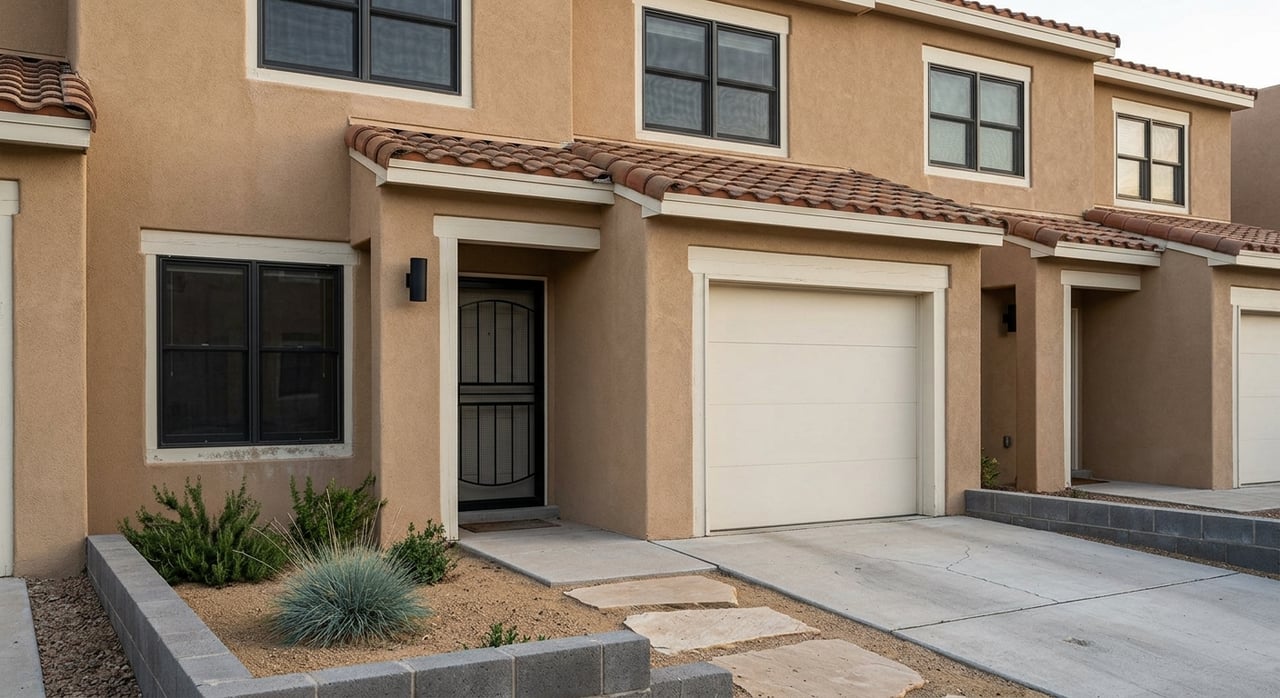
At a high level, a townhome in Chandler usually means an attached home with a smaller private lot and more shared upkeep handled through an HOA. A detached house usually gives you more private outdoor space and more freedom over the property, but it also puts more maintenance on your plate.
That difference can show up in practical ways every month. You may trade yard size for amenities, or trade HOA dues for direct responsibility over landscaping, exterior repairs, and long-term upkeep. Neither option is automatically better. The right fit depends on how you want to live.
How lot size and upkeep differ
One of the clearest differences in Chandler is the amount of private land that comes with the property. Recent local examples show townhomes with very compact footprints, including one Pinelake townhome on a 1,077-square-foot lot. In contrast, detached homes in Chandler can offer much more outdoor space, from a 3,559-square-foot lot in central Chandler to a 9,770-square-foot lot with a pool and mature landscaping in another no-HOA area.
That size gap often changes your day-to-day ownership experience. With a townhome, you may have a patio or small yard, but less mowing, trimming, and exterior work. With a house, you usually get more room to spread out, entertain, garden, or add features over time, but you also take on more of the work and cost yourself.
What townhome upkeep often includes
In Chandler, many townhome communities use HOA dues to cover services that detached homeowners often handle on their own. Depending on the community, that can include:
- Roof repair or replacement
- Exterior maintenance
- Front-yard maintenance
- Grounds maintenance
- Insurance on certain exterior elements
- Pest control
- Trash service
- Street or common-area upkeep
For example, one Chandler townhome example includes roof repair, roof replacement, insurance, grounds maintenance, front-yard maintenance, and exterior maintenance through association fees. Another attached-home example in Fulton Ranch includes roof, pest control, trash, grounds, and exterior maintenance as part of its HOA structure.
What detached home upkeep often means
A detached house usually gives you more control, but also more responsibility. You may need to budget for roof repairs, exterior paint, landscaping, irrigation, pest treatment, and general yard care yourself unless your HOA covers a limited portion of the community grounds.
This is especially important in Chandler, where outdoor maintenance can vary a lot based on lot size, pools, and landscaping. Even though the city says its water and wastewater rates are among the lowest of major Valley cities, larger yards and irrigated landscapes can still raise your monthly carrying costs.
HOA rules can shape your experience
In Chandler, HOAs are not a minor detail. The city states that HOAs are private organizations with CC&Rs and may enforce standards that are more restrictive than city code. That means your community rules may affect everything from exterior changes to parking, landscaping, and how shared spaces are used.
For some buyers, that structure is a plus. It can make ownership feel more predictable and reduce the number of exterior tasks you manage yourself. For others, especially buyers who want maximum flexibility with their property, HOA rules can feel limiting.
The key is to look past the monthly dues and understand what those dues buy you. In some communities, the HOA covers substantial maintenance and amenities. In others, the fees may be lower but cover much less.
How monthly costs usually compare
Most buyers first notice the purchase price difference. Current Chandler examples show townhomes roughly ranging from about $299,000 to $629,999, while detached homes in parts of Fulton Ranch begin around $799,000 and can rise well above $1 million. That spread is one reason many buyers start with townhomes when monthly payment comfort is a top priority.
Still, price is only part of the picture. HOA dues can narrow the gap between a townhome and a house, especially in newer attached-home communities with broader maintenance coverage.
Typical cost categories to compare
When you compare a Chandler townhome and house, look at these costs side by side:
- Purchase price
- Monthly mortgage payment
- HOA dues
- Property taxes
- Homeowners insurance
- Utility costs
- Yard and landscape maintenance
- Future exterior repair costs
A Chandler townhome example showed 2025 property taxes of $1,880, or roughly $157 per month. A no-HOA detached home example showed $2,264, or about $189 per month. A higher-priced detached Fulton Ranch home showed $3,792 in taxes, or about $316 per month.
Those examples show why it helps to compare the full monthly picture instead of focusing on list price alone. A lower-priced townhome with several layers of HOA dues may not feel as far apart from a house as it first appears. On the other hand, a detached home with no HOA may appeal to you if you prefer handling upkeep on your own terms.
Chandler neighborhood examples to help you decide
Different parts of Chandler make this choice easier to picture. Looking at neighborhood patterns can help you connect the numbers to real-life living.
Ocotillo for amenity-rich attached living
Ocotillo is one of Chandler’s stronger examples of attached-home living tied to shared amenities. Current condo and townhome options in the area show features such as pools, spas, clubhouses, exercise rooms, tennis, golf-related amenities, and lake access.
If you want a lower-maintenance setup and enjoy community features, Ocotillo can be a useful model for what townhome living in Chandler may look like. It is a good reminder that smaller private space can come with a broader list of shared benefits.
Fulton Ranch for side-by-side comparison
Fulton Ranch is one of the clearest examples of a mixed-product community in Chandler. Local examples show both townhomes and detached homes in the same general area, with attached homes around 1,056 to 2,290 square feet and detached homes around 2,564 to 6,492 square feet.
That makes Fulton Ranch especially helpful if you are trying to compare lifestyle tradeoffs, not just neighborhoods. You can see how a more compact, association-supported option stacks up against a larger home with more private yard space in a similar part of town.
Central Chandler for no-HOA house options
If avoiding monthly association fees is a high priority, older central Chandler pockets can offer useful house options. Local examples include detached homes with no HOA, private fenced yards, larger lots, pools, and larger garages.
That does not mean every house in central Chandler will be maintenance-free or lower-cost overall. It simply means you may find more opportunities to trade HOA structure for direct control.
Sun Groves for detached homes with HOA influence
Sun Groves shows that detached-home living does not always mean no HOA involvement. Chandler highlighted the Sun Groves HOA in a 2025 water conservation story about converting common-area grass to xeriscape, which shows how association planning and landscape management still matter even in house-focused communities.
If you are leaning toward a detached home, this is a helpful reminder to read the HOA details carefully. Some neighborhoods may have houses but still maintain shared spaces and community standards through dues.
Questions to ask yourself before choosing
Before you decide, think about how you want your home to support your daily life. The best choice often becomes obvious when you connect it to your routine, budget, and future plans.
A townhome may fit better if you want:
- Less exterior maintenance
- A lower purchase price entry point in Chandler
- Shared amenities
- A smaller yard to manage
- More predictable upkeep through HOA dues
- A lock-and-leave lifestyle for travel or a busy schedule
A house may fit better if you want:
- More private outdoor space
- Greater control over your property
- Room for a pool, garden, or larger patio setup
- No shared walls
- Flexibility in a no-HOA or lighter-HOA setting
- More separation between living spaces and neighbors
A simple way to make the decision
If you are stuck, try ranking these four factors from most important to least important: monthly payment, maintenance level, private outdoor space, and property control. Your top two priorities usually point you in the right direction.
If monthly predictability and low upkeep rise to the top, a townhome may be the stronger fit. If space and autonomy matter most, a detached house may be worth the added cost and responsibility. In Chandler, both options can work well, but they solve different problems.
The best move is to compare real properties side by side in the areas you are considering. That lets you evaluate HOA coverage, lot size, taxes, and neighborhood structure in a practical way instead of guessing from photos alone.
Whether you are relocating, buying your first home, or trying to simplify your next move, having a local guide can make the choice much clearer. If you want help comparing Chandler townhomes and houses based on your budget and lifestyle, reach out to Alexandria Brescia, PLLC for personalized guidance.
FAQs
How do Chandler townhomes usually differ from Chandler houses?
- Chandler townhomes usually have smaller private lots, shared walls, and more HOA-managed upkeep, while detached houses usually offer more private space and more owner responsibility for maintenance.
Are HOA fees common for Chandler townhomes?
- Yes. Chandler townhome examples in the research ranged from about $208 per month to $340 per month plus additional master association fees, depending on the community and what services were included.
Can you find Chandler houses with no HOA?
- Yes. Older central Chandler areas include examples of detached homes with no HOA, including properties with private yards and larger lots.
Is a Chandler townhome always cheaper each month than a Chandler house?
- Not always. Townhomes often have lower purchase prices, but HOA dues can narrow the monthly gap, so it is important to compare mortgage, taxes, insurance, and fees together.
Which Chandler neighborhoods show both townhome and house options?
- Fulton Ranch is a strong local example because it includes both attached and detached homes in the same general area, making it easier to compare space, upkeep, and cost tradeoffs.
Why do HOA rules matter in Chandler home choices?
- The City of Chandler says HOAs can enforce standards that are more restrictive than city code, so the rules may affect your maintenance responsibilities, exterior changes, and overall ownership experience.