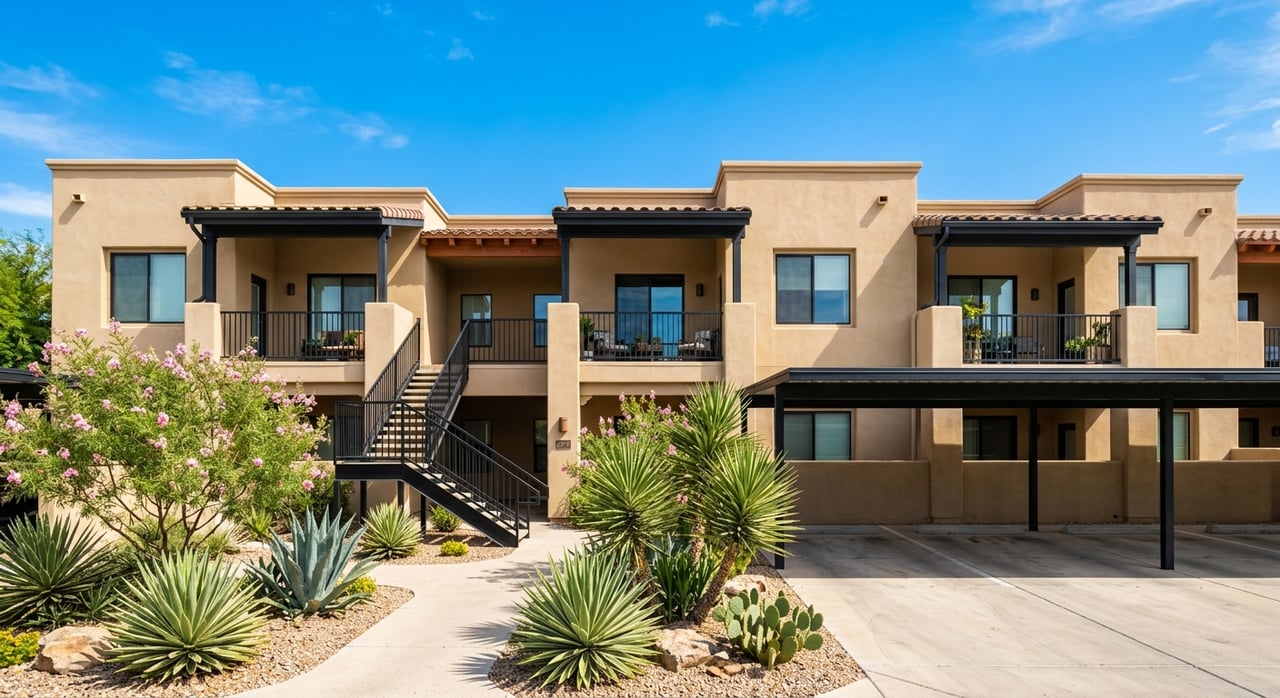
Wondering if a condo in Tempe is a smart fit for your lifestyle and budget? You are not alone. Many buyers are drawn to Tempe for its access, convenience, and lower-maintenance ownership, but the monthly costs and HOA rules can feel harder to compare than a typical house purchase. This guide will help you understand what condo living in Tempe really looks like, what you may pay for, and which tradeoffs matter most before you buy. Let’s dive in.
Why condo living stands out in Tempe
Tempe’s condo market is closely tied to the city’s urban core. City materials describe the Fifth Street downtown area as connecting City Hall, Arizona State University, Sun Devil Stadium, the Transportation Center, light rail, hotels, mixed-use development, multi-family housing, and nearby historic or redeveloping areas. The city also notes that mixed-use zoning in the urban core can exceed 65 dwelling units per acre, which helps explain why condo living here often feels more connected and compact than in other parts of the Valley.
That setting creates a lifestyle many buyers want. In downtown Tempe, condo ownership can mean easier access to work, recreation, dining, entertainment, and alternative transportation. The city is also investing in public realm improvements, including ongoing Mill Avenue refresh efforts, which adds to the appeal for buyers who want a walkable environment.
What kinds of condos you will find
Tempe condos are not all the same. Current listings show everything from tower-style and waterfront units near Tempe Town Lake to lower-rise gated communities in south Tempe. You will also find older communities near ASU, where HOA coverage may include a broader list of maintenance items.
That variety matters because your day-to-day experience can look very different depending on the building. One community may offer structured parking and a larger amenity package, while another may focus more on simple, practical ownership with fewer extras. When you compare options, it helps to look beyond price and ask what type of living environment you actually want.
Tempe condo costs come in layers
One of the biggest mistakes buyers make is focusing only on the purchase price. In Arizona, each condo unit is a separate parcel of real estate that is separately taxed and assessed. That means your ownership costs usually include several moving parts, not just your mortgage payment.
Here are the main cost layers to expect:
- Mortgage
- Property taxes
- Homeowners insurance
- HOA dues
- Utilities
- Possible special assessments
- Possible HOA transfer or resale-related charges
Arizona law also requires condo associations to adopt budgets at least annually. That is important because your monthly dues are tied to the association’s operating needs, shared expenses, and long-term planning.
Why HOA fees vary so much
If you have looked at condo listings in Tempe, you have probably seen a wide range of HOA fees. Current examples show monthly fees in the mid-$200s, such as $235 or $263, while others are listed at $400, $445, or even $1,456 per month in a Tempe Town Lake building. One listing also showed $888 quarterly plus a separate $368 quarterly HOA, which is a good reminder that some properties include more than one association layer.
These listing examples are not a citywide average, but they show how different one building can be from another. A higher fee is not automatically bad, and a lower fee is not automatically better. The key question is simple: what does the fee actually cover?
What your HOA dues may include
In some Tempe condo communities, HOA dues cover much more than exterior landscaping. Current listings show examples where dues may include:
- Water
- Sewer
- Trash
- Roof replacement
- Exterior maintenance
- Grounds maintenance
- Landscaping
- Pest control
- Gas
- Electric in some buildings
Other communities cover a narrower set of items. That is why the fee itself does not tell the whole story. A condo with higher dues may still make financial sense if it reduces your separate utility or maintenance costs.
Maintenance is easier, but not always simple
A major reason buyers choose condos is lower-maintenance ownership. Under Arizona law, the association is generally responsible for maintenance, repair, and replacement of common elements unless the declaration says otherwise. The unit owner is generally responsible for the unit itself.
Still, the boundary is not always obvious. The declaration may classify balconies, patios, entryways, exterior doors, and exterior windows as limited common elements. That means the maintenance line between you and the association may be different from what you expect, so reviewing those details before you buy is very important.
Parking can be a major tradeoff
Parking is one of the biggest building-by-building differences in Tempe condo living. Current listings show a mix of deeded underground spaces, assigned covered parking, garage spaces, and communities with multiple parking arrangements. If you have more than one vehicle, host guests often, or want secure parking, this can become a deciding factor quickly.
Downtown adds another layer. Tempe materials note that on-street parking can be limited in high-traffic areas, though TempeTRiP reports more than 20,000 public parking spaces within a 2-mile radius of downtown. Even so, you will want to understand exactly what comes with your unit instead of assuming public parking will solve everything.
HOA governance matters more than many buyers expect
Condo living usually means more shared decision-making than owning a detached home. Arizona law requires open HOA meetings with notice, an annual meeting, and access to association records within 10 business days. For buyers, that makes association documents more than just paperwork. They are a window into how the community is managed.
On resale, the association must provide key documents, including:
- The declaration
- Bylaws
- Current budget
- Annual financial report
- Reserve study, if any
- Insurance coverage statement
- Litigation summary
- Assessment information
Arizona law also allows the association to charge up to $400 for the disclosure package, plus limited rush or update fees. This is a small detail that can still affect your transaction budget, especially if you are trying to keep closing costs predictable.
Who condo living fits best in Tempe
Condo living in Tempe tends to work best when you value access and convenience over private exterior space and full control over every part of the property. City materials specifically frame downtown condominium residences as appealing to buyers who want homeownership, independence, and proximity to work, entertainment, recreation, and alternative transportation.
That often makes Tempe condos a practical option for:
- Buyers who want low-maintenance living
- Busy professionals
- Lock-and-leave owners
- Downsizers
- Buyers who want to be near ASU or downtown Tempe
- Some investors comparing ownership options
If you care more about location, mobility, and reduced exterior upkeep than having a yard or total control over the property’s exterior, a condo may be a strong fit.
The main tradeoffs to weigh
Every housing choice comes with tradeoffs, and condos are no different. In Tempe, the trade is usually clear: you may give up yard space and some exterior control in exchange for convenience, shared amenities, and less day-to-day maintenance.
The harder part is that some costs are shared and can change over time. HOA dues may rise, special assessments can happen, and building rules can affect how you use the property. That does not make condo living a poor choice. It simply means your research needs to go deeper than square footage and list price.
Questions to ask before buying a Tempe condo
Before you move forward on a condo, it helps to ask targeted questions that reveal the real cost and ownership experience. A few of the most important ones include:
- Does the HOA fee cover water, trash, sewer, or other utilities?
- Is there more than one HOA?
- Is there a current reserve study?
- What do the recent financials show?
- How is parking assigned?
- Where does the unit boundary end?
- Which items are limited common elements?
These answers can shape both your monthly budget and your long-term comfort with the property.
A practical way to compare Tempe condos
When you compare condos in Tempe, try looking at each option through three simple lenses: lifestyle, monthly cost, and control. Lifestyle covers things like location, walkability, access to transit, and maintenance level. Monthly cost includes not just the mortgage, but taxes, insurance, dues, utilities, and any layered HOA structure.
Control is the category many buyers overlook. That includes parking rights, renovation limits, pet rules, maintenance boundaries, and how much influence the HOA has over the building and shared spaces. The right condo is usually the one that balances all three in a way that matches how you actually live.
If you want help comparing Tempe condo options with less stress and more clarity, Alexandria Brescia, PLLC can help you evaluate monthly costs, HOA details, and lifestyle fit so you can make a confident move.
FAQs
What is condo living like in Tempe?
- Condo living in Tempe often centers on convenience, access to downtown, proximity to ASU, light rail connectivity, and lower-maintenance ownership compared with many detached homes.
What costs should you expect when buying a condo in Tempe?
- You should plan for mortgage costs, property taxes, homeowners insurance, HOA dues, utilities, possible special assessments, and possible HOA resale or transfer-related charges.
Why are HOA fees so different across Tempe condo communities?
- HOA fees vary because communities offer different levels of services, maintenance coverage, utilities, parking arrangements, amenities, and in some cases more than one association layer.
What might HOA dues cover in a Tempe condo?
- Depending on the community, dues may cover water, sewer, trash, roof replacement, exterior maintenance, grounds care, landscaping, pest control, gas, and sometimes electric.
What should you review before buying a condo in Tempe?
- You should review the declaration, bylaws, current budget, annual financial report, reserve study if available, insurance information, assessment details, parking setup, and the unit versus limited common element boundaries.
Who is a Tempe condo a good fit for?
- A Tempe condo can be a strong fit if you want low-maintenance ownership, easy access to work or recreation, and are comfortable with shared rules and shared expenses.